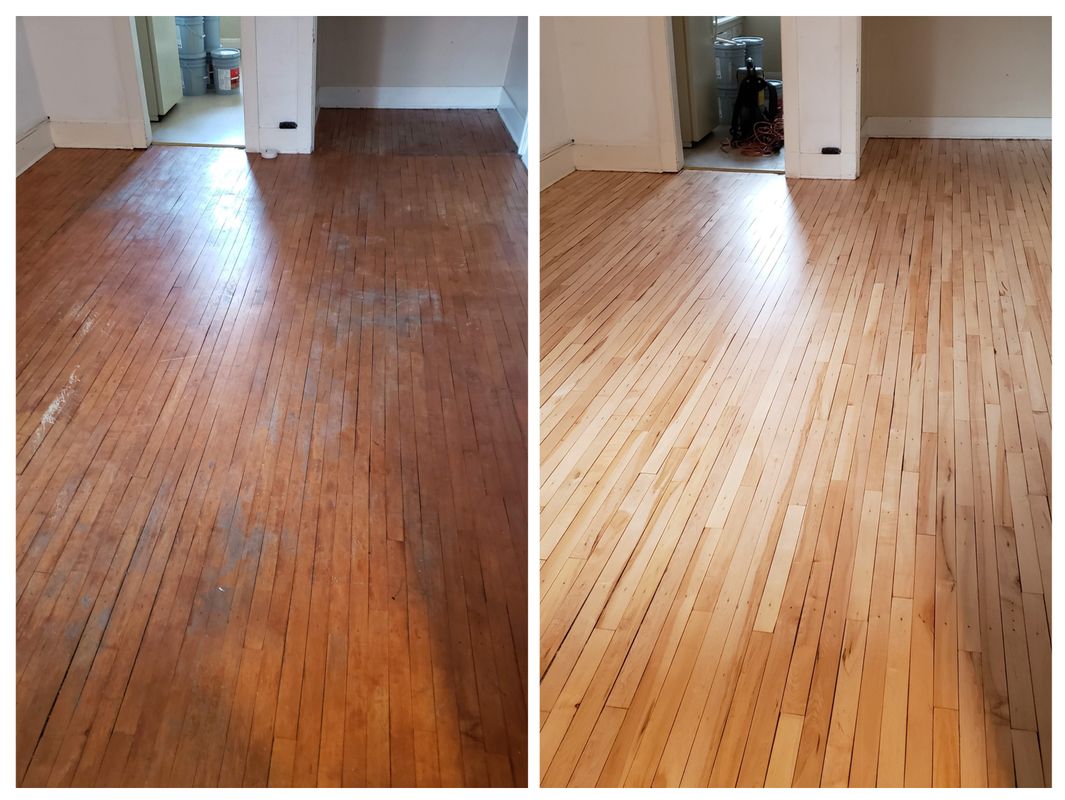
What We Find in Montana Homes
Western Montana’s housing stock is old in ways that matter for floor restoration. Helena’s historic district — the Gulch, Last Chance Gulch, and the surrounding neighborhoods — holds homes built in the 1880s through the early 1900s, many of them with original fir or pine floors still underfoot. Those floors have survived more than a century of hard use. They’ve been painted, carpeted, and in some cases sealed under layers of vinyl going back to the 1960s.
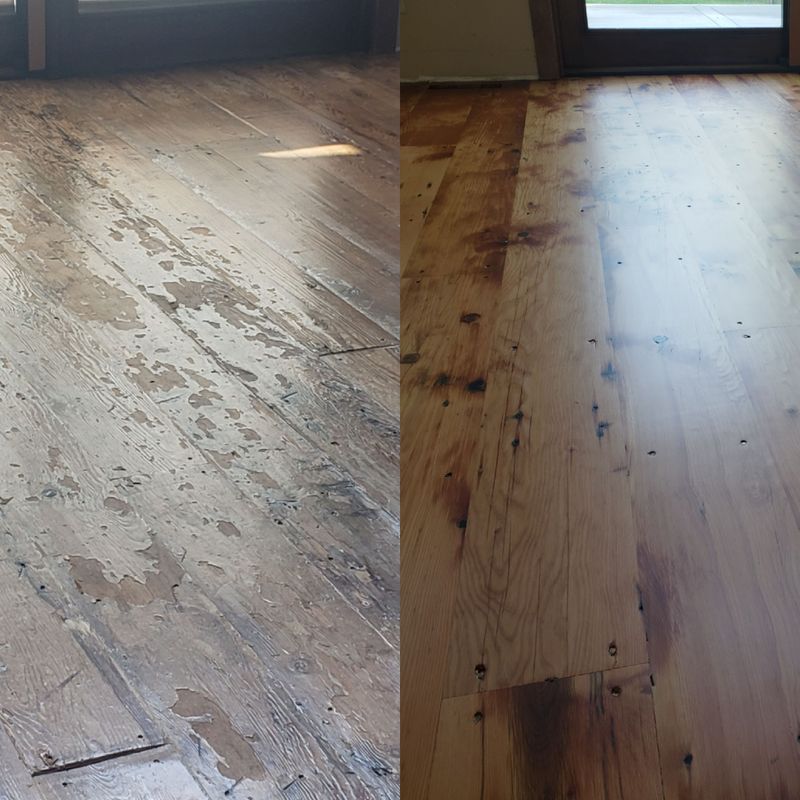
When we pull up carpet in these homes, what’s underneath is usually worth saving. The wood is old-growth in many cases — denser and tighter-grained than anything milled today — and once it’s sanded down to bare wood and properly finished, it can look extraordinary. We’ve restored floors that the previous contractor walked away from.
The damage patterns we see most often are specific to how Montana homes are lived in:
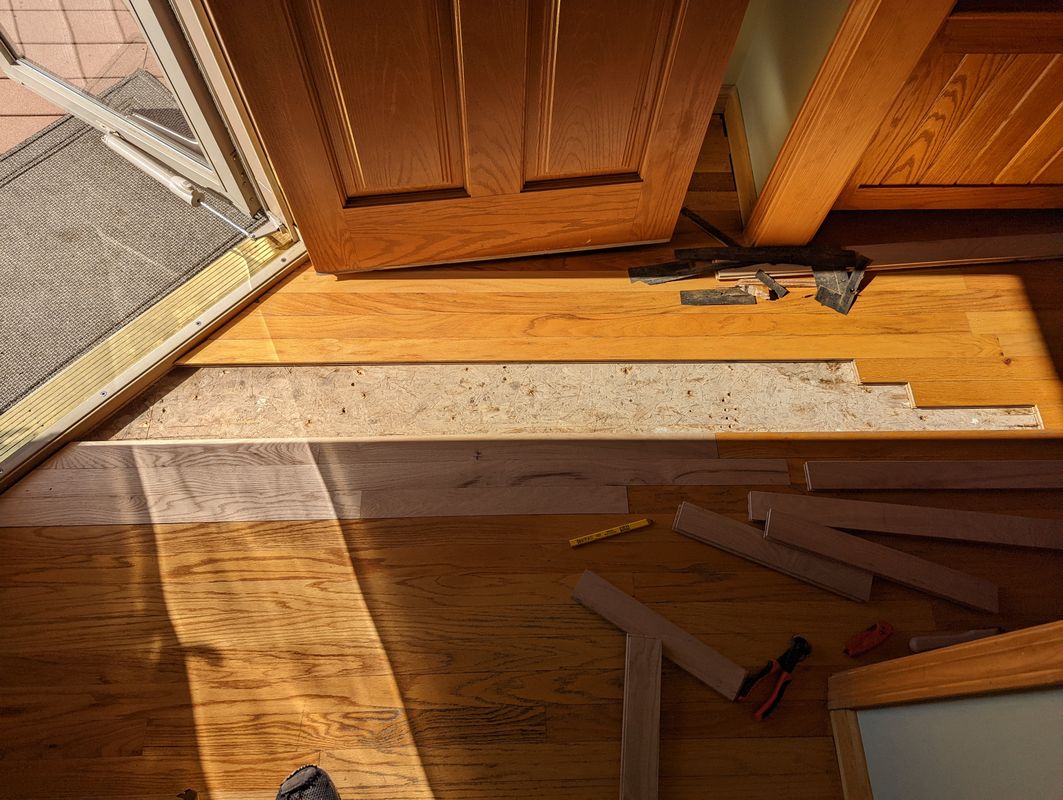
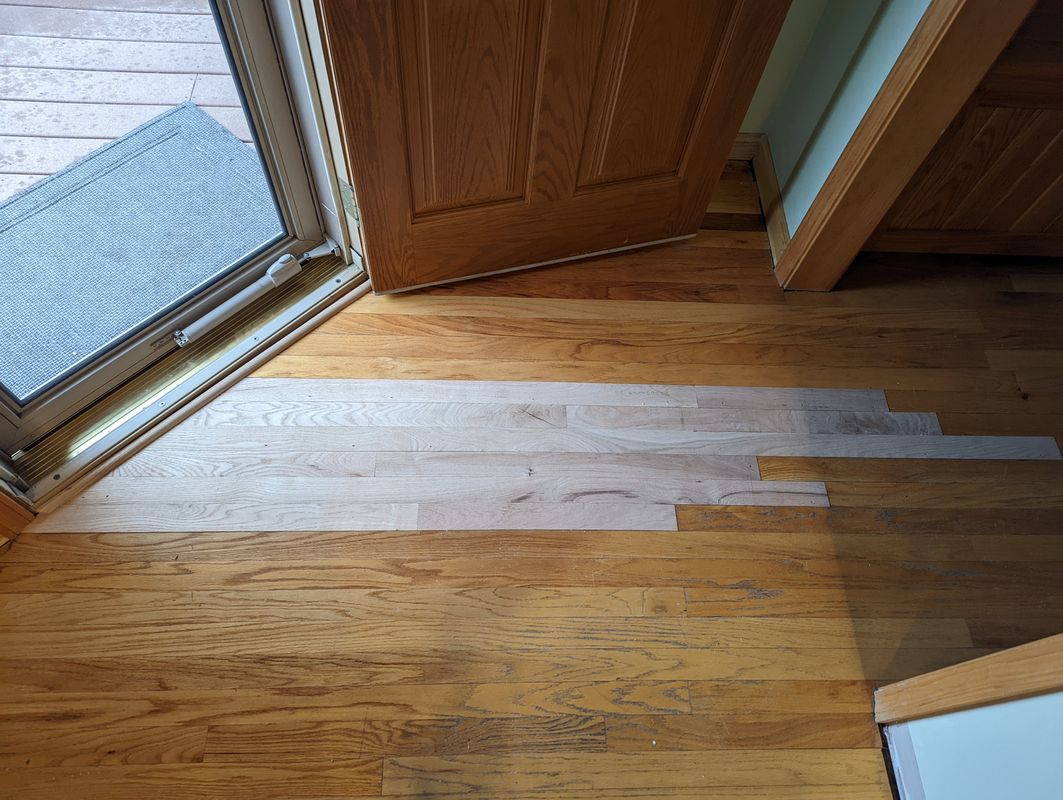
- Entryway water damage from snow and mud tracked in during the long shoulder seasons. Boards near exterior doors absorb water repeatedly over years, which can blacken the wood and warp or loosen boards from the subfloor.
- Cupping and gapping near heat sources — wood stoves, radiators, and floor registers. Montana’s dry winters pull indoor humidity down to 20% or lower, and wood that sits in the direct path of that dry heat responds accordingly.
- Pet and age staining that has penetrated deep into the wood. Minor staining sands out. Staining that has reached the subfloor requires board replacement — we’ll tell you which you’re dealing with on the estimate.
- Subfloor surprises in older homes: original planks that have shifted, moisture damage from below in homes with crawlspaces, or structural settling that has created high and low spots across the room.
What the Assessment and Repair Process Looks Like
Before any restoration work begins, we do an honest on-site assessment. That conversation covers what the floor is made of, what’s caused the damage, and what a realistic outcome looks like. Some floors can be fully restored. Others can be stabilized and refinished in a way that preserves their character without pretending the history didn’t happen. We’ll tell you which is which.
Here’s the general sequence for a repair and restoration project:
- On-site estimate. We assess the extent of the damage, check the subfloor condition, and identify any structural issues that need to be addressed before sanding or finishing can happen. You’ll know what you’re working with before any work begins.
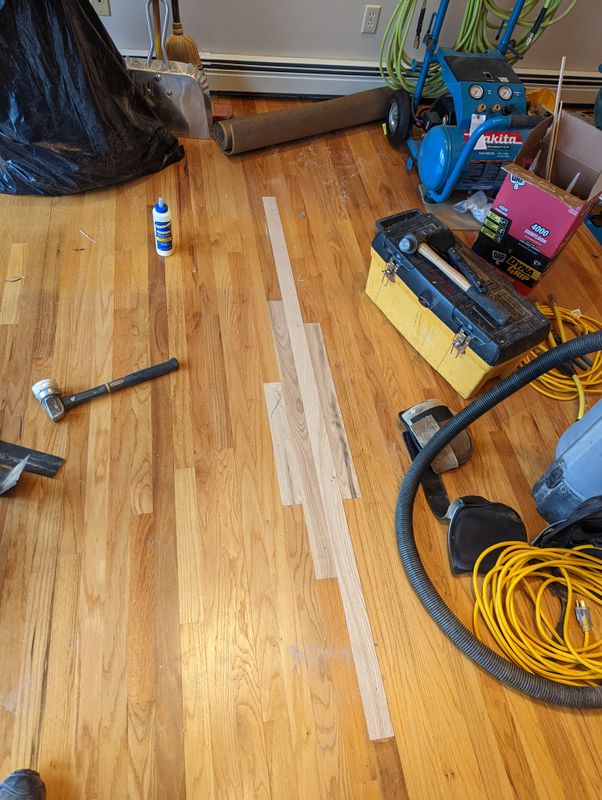
- Board replacement. Boards that are blackened, buckled, or structurally compromised come out first. We source replacement stock that matches as closely as possible — species, width, and character — and weave each piece in by hand.
- Subfloor repair. If the subfloor has taken on moisture or shifted, it gets addressed here. Sanding over a bad subfloor produces a bad result.
- Sanding. We sand through multiple grits to reach bare, clean wood across the entire surface — not just the areas that were repaired. This is what makes the floor read as one consistent piece.
- Staining and finishing. We apply stain if you’re changing the color, then multiple coats of finish with sanding between coats. We specialize in water-based finishes, which cure faster, handle Montana’s seasonal wood movement well, and let the natural color of the wood come through.
Most repair and restoration projects run 4–7 days depending on the extent of the damage and the size of the floor. A heavily damaged historic floor in a large room takes longer than a localized water repair in a kitchen.
What Can Be Saved — and What Can’t
The honest answer is: most floors can be restored, or at least significantly improved. Hardwood is thick enough to be sanded multiple times over its life, and old-growth fir is especially forgiving because of its density. Even floors that look rough — deep scratches, dark staining, a surface that’s been through decades of traffic — usually have good wood underneath.
The exceptions involve the subfloor or the structure. When moisture has reached the subfloor and caused significant rot or deterioration, that work has to happen first, and it’s outside the scope of what we do. We’ll tell you if that’s what you’re looking at, and point you toward who handles it. Once the structure is sound, we come back in for the floor.
Cupping — where boards bow upward at the edges — is almost always a moisture issue, and it often partially corrects once the moisture source is addressed. Severe buckling, where boards have lifted and separated entirely, usually requires replacement. We assess case by case.
We serve Helena, Butte, Bozeman, Big Sky, and the surrounding communities throughout western Montana. Every project starts with a free on-site estimate.