Finish Selection in a Montana Climate
Most of the country treats finish selection as an aesthetic choice. In Montana, it’s also a practical one.
Our dry winters are hard on hardwood. When forced-air heat and wood stoves pull indoor humidity down into the 20% range, wood contracts. It expands again when humidity returns in spring. A finish that can’t flex with that movement — one that’s too brittle or too thick — will crack, peel, or haze faster than it should.
Water-based finishes handle this better. They cure to a harder, more flexible film than oil-based, which means they move with the wood instead of fighting it. They also dry clearer, so the natural color of your white oak or hickory comes through rather than being shifted amber by the finish. And because cure times are shorter — typically 24 hours before light foot traffic versus 3–4 days for oil-based — you’re back in your home sooner.
Oil-based finishes have their place. They add a warm, honeyed tone that some homeowners specifically want, and they’re very durable. But the strong odor and long cure time make them a harder choice for occupied homes. If you’re set on the look, we’ll talk through whether the tradeoff makes sense for your project.
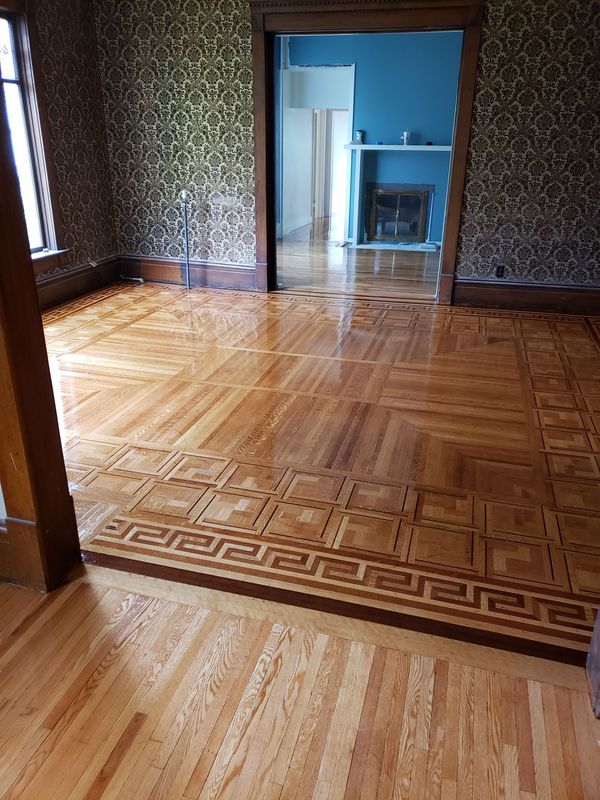
Whatever finish we apply, we’ll also talk about sheen. A high-gloss finish shows every footprint and scratch. A satin or matte sheen is more forgiving in daily life, and it tends to look more at home in the older craftsman houses in Helena’s Gulch and in the timber-frame chalets up at Big Sky — spaces where the wood is meant to feel lived in, not showroom-polished.
What a Refinishing Project Actually Looks Like
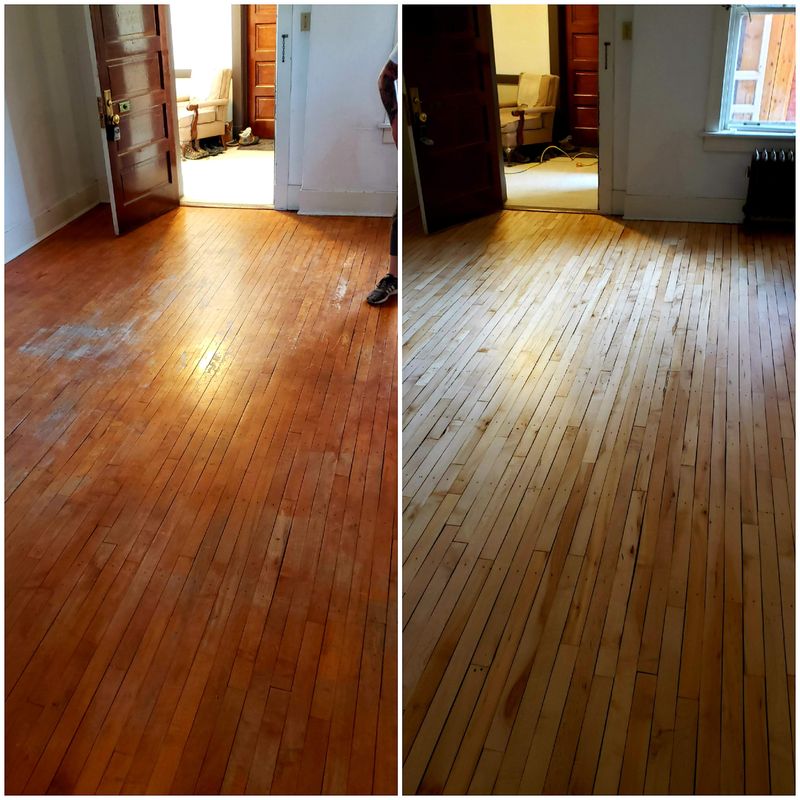
Most refinishing projects run 3–5 days from start to finish. Here’s what that typically looks like.
On-site estimate. We look at your floors, assess the finish condition, check for soft spots or structural issues, and talk through what you want the end result to look and feel like. This is where we tell you honestly whether a full sand-and-refinish is warranted, or whether a buff-and-recoat will do the job.
Prep and dust containment. We cover doorways and HVAC vents to keep fine sanding dust out of the rest of your home. Clear the room of furniture and anything hanging on nearby walls before we arrive — sanding vibration travels.
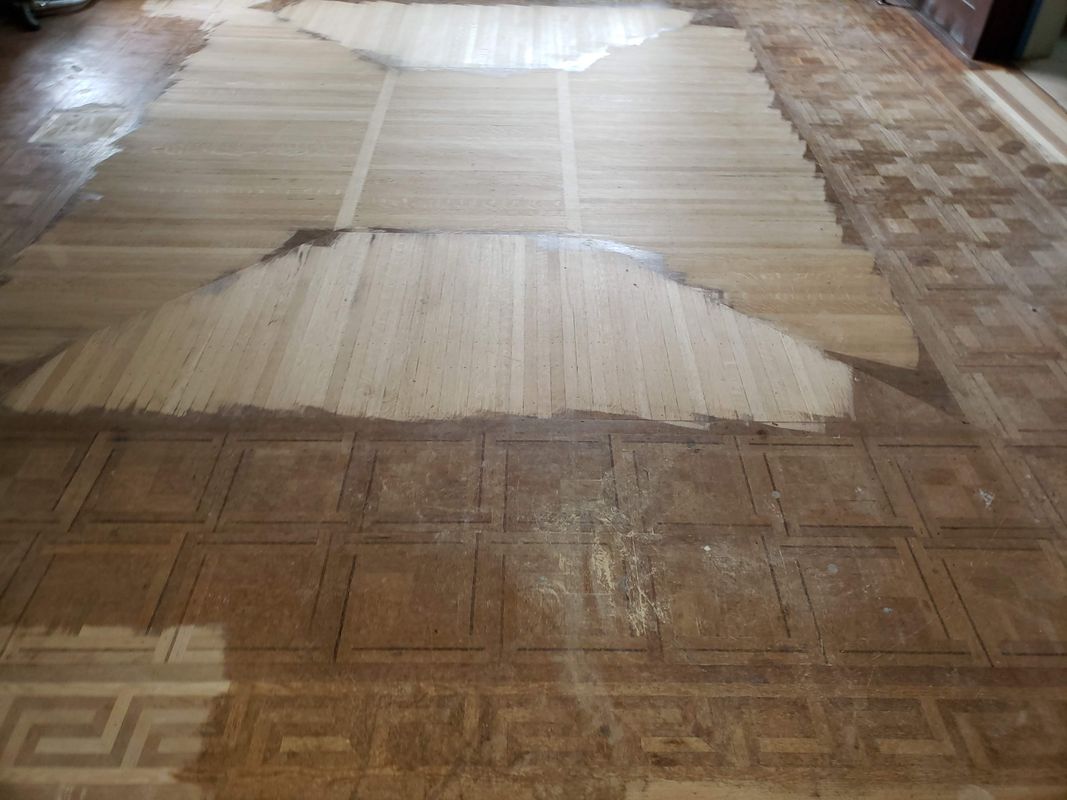
Sanding. We work through progressively finer grits, starting coarse enough to cut through old finish and minor surface damage, finishing fine enough that the wood is smooth and ready to take a stain or clear coat evenly. Edges and corners are done by hand.
Stain (if applicable). If you’re changing the color of your floors, stain goes on after sanding and before the finish coats. This is also when color-matching for repairs or additions happens.
Finish coats. We apply multiple coats, sanding lightly between each, until the surface has the depth and durability it needs. Water-based finishes are dry to the touch within a few hours; we typically plan for light foot traffic the following day and full use within a few days.
Cure and care. The finish continues to harden for several weeks after the final coat. We’ll give you specific instructions for your floor — including what to put on it, what to keep off it, and how long to wait before rugs go back down.
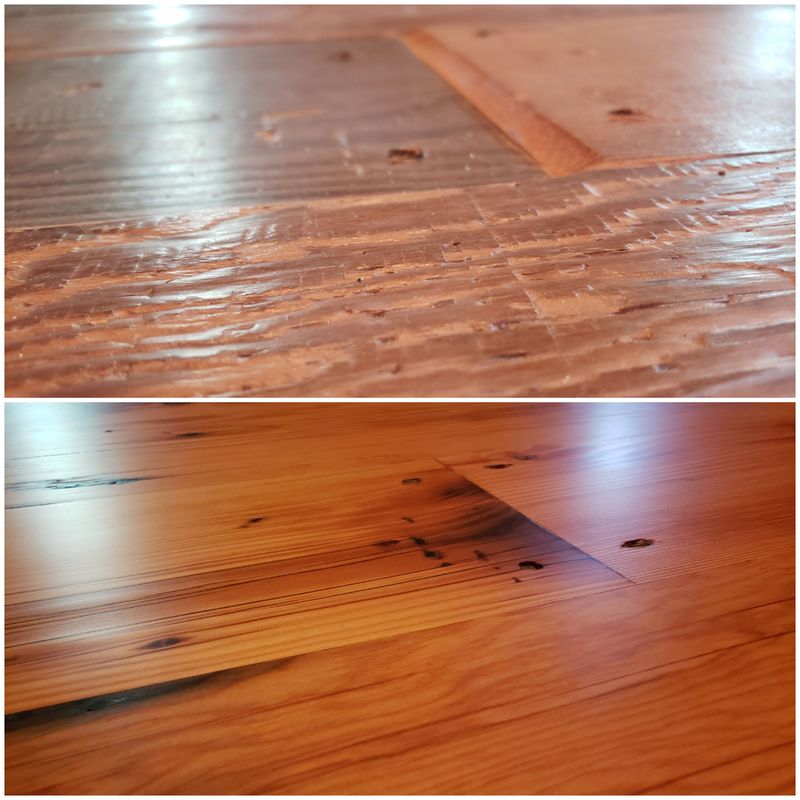
If your floors have isolated damage — a section of cupped boards near a radiator, a patch of pet staining, boards that are too far gone to sand — we’ll repair or replace those sections before sanding begins so the final floor is consistent throughout.
Keeping Your Refinished Floors in Good Shape
A properly applied finish on sound hardwood should last 7–10 years before it needs another full refinish. What happens between now and then is mostly about maintenance.
The single most important habit is sweeping or dust mopping regularly. Grit tracked in from outside is what destroys finish over time — it acts like sandpaper underfoot with every pass. A doormat at every entrance makes a measurable difference.
Use a hardwood-specific cleaner, not vinegar or general-purpose floor spray. Both can dull a water-based finish over time. When the finish starts to look flat or dull — usually after a few years in high-traffic areas — a buff-and-recoat can restore the sheen without a full sand-down.
Montana winters add one more consideration: dry air. When indoor humidity drops below 30%, you’ll often see small gaps open between boards as the wood contracts. This is normal seasonal movement, not a sign that something went wrong. Keeping humidity in the 35–55% range minimizes it. If you heat primarily with a wood stove, a humidifier in the main living area makes a real difference in how the floors look and feel through the winter.
Not sure if your floors need refinishing? Our refinishing guide covers the signs to look for and when it makes sense.
We serve Helena, Butte, Bozeman, Big Sky, and the surrounding communities throughout western Montana. Every project starts with a free on-site estimate.