Staircase Projects Across Western Montana
The stair work we do varies a lot depending on where the home is and how it was built.
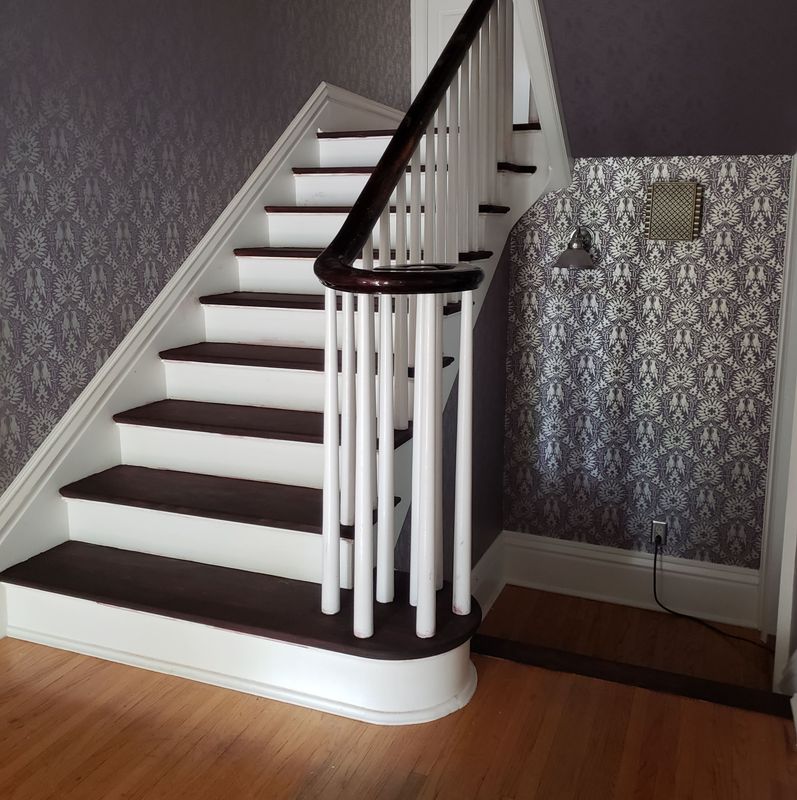
In Helena’s older neighborhoods — the Gulch, the Broadway corridor, the blocks climbing toward Mount Helena — multi-story homes from the turn of the century often have original wood stairs that have been carpeted over at some point. When the carpet comes up, what’s underneath ranges from sound original fir that just needs refinishing to treads that have rotted out from water infiltration or been weakened by decades of concentrated traffic. We’ve seen both. The assessment tells us what’s there before any work begins.
Newer construction south of Bozeman tends to come with builder-grade stair components — pine or poplar treads with an oil-based finish that shows wear within a few years. Homeowners who have invested in white oak or hickory floors throughout the house often want the stairs to match. That’s a full conversion: removing the existing treads and risers, building out solid hardwood replacements, and finishing everything to match the main floor.
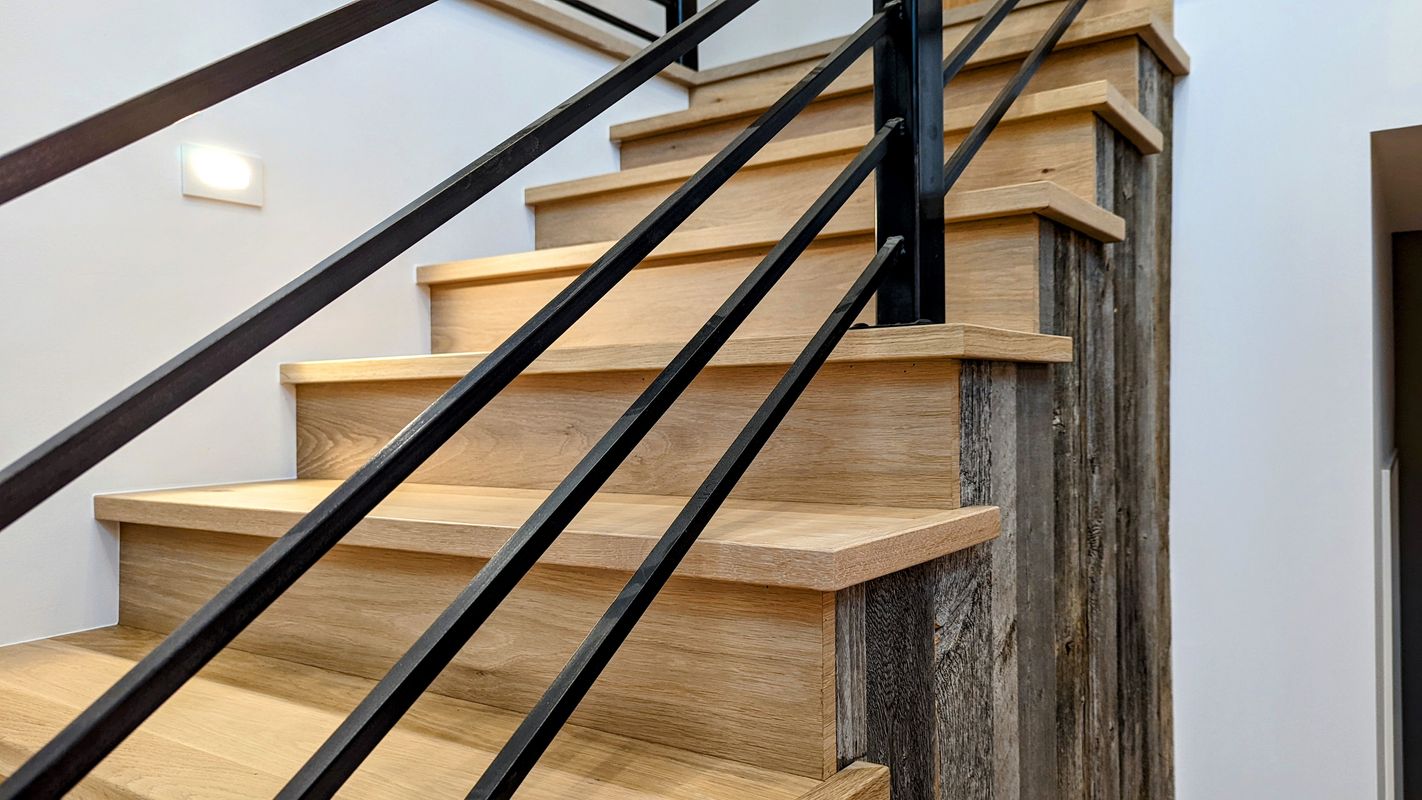
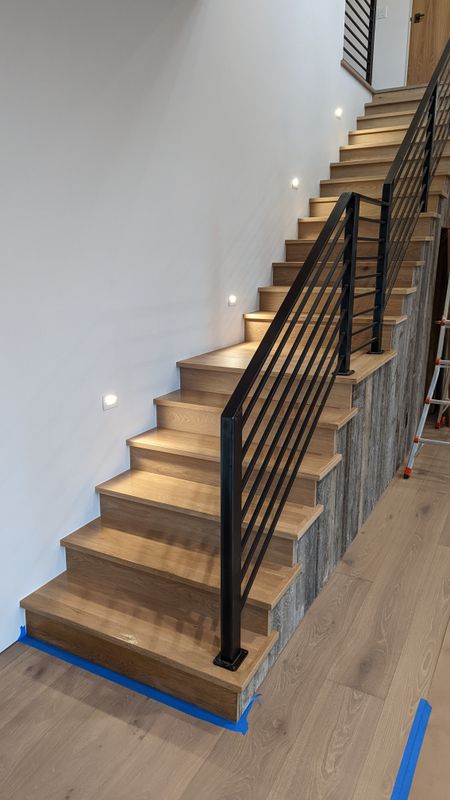
Up at Big Sky and in the larger mountain chalets in the surrounding area, the design expectations are different. Open-concept great rooms with a staircase as the central feature call for a different level of detail — slab treads that read as furniture-grade millwork, careful attention to how the baluster and rail system integrates with the wood, transitions that are clean and intentional from every angle.
Cabin-style builds across western Montana often want the opposite: a rustic, lived-in look. Reclaimed wood treads, hand-scraped texture, a finish that doesn’t try to hide the character of the material. We can work in either direction.
Why Stairs Require More Precision Than Floors
A floor has some tolerance for variation. A staircase doesn’t.
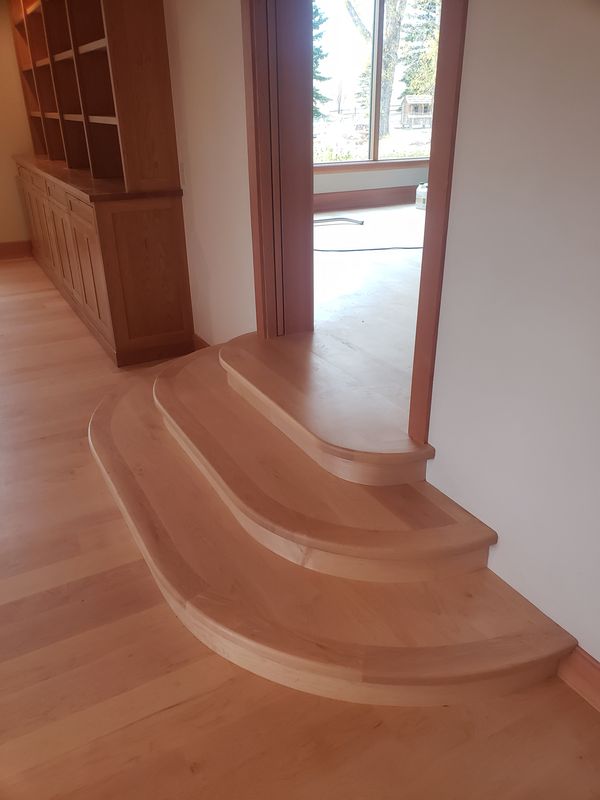
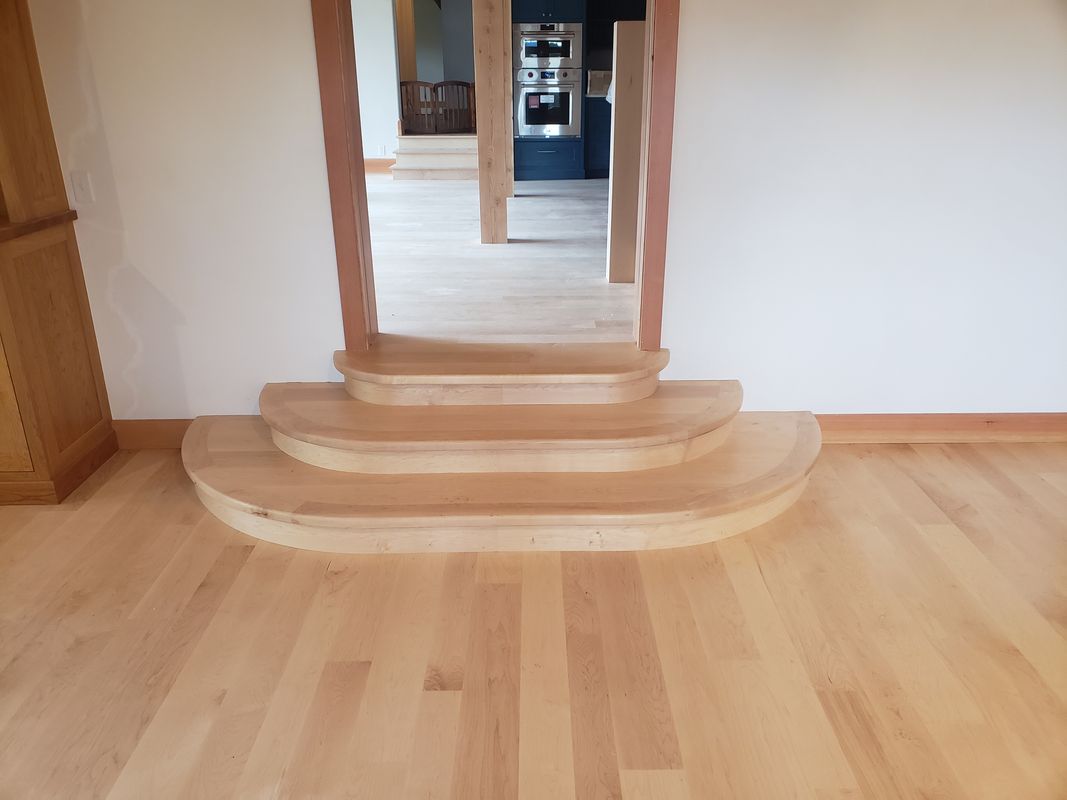
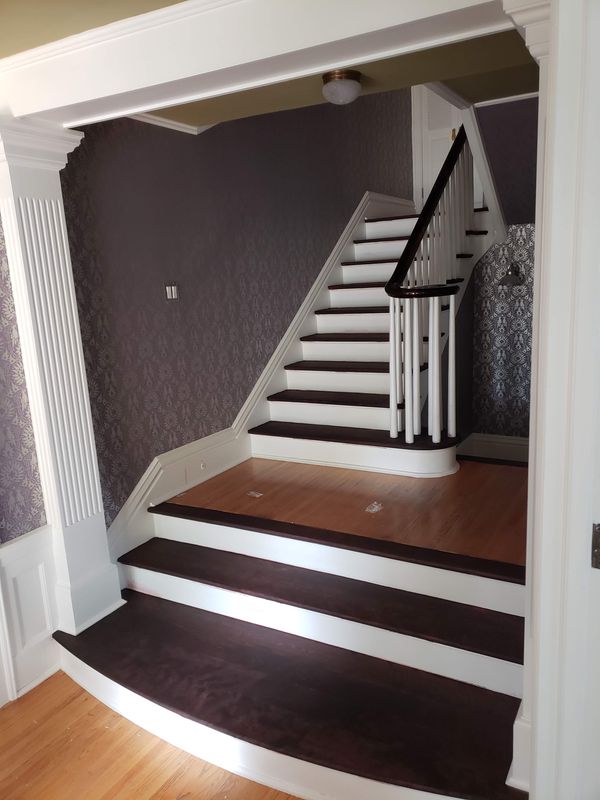
Every tread has to be level, at a consistent height from the one above and below it. Even a few millimeters of inconsistency across a run of stairs is something a person feels with every step, even if they can’t identify it. The nosing — the front edge of each tread — has to be shaped and finished consistently. Transitions where the stairs meet the landing, or where hardwood meets tile at the base, have to be tight and intentional.
The finish on stair treads also takes more abuse than almost anywhere else in a home. Foot traffic is concentrated on the front third of each tread, day after day. That’s why we use water-based finishes on stairs — they cure to a harder film than oil-based, and they handle Montana’s dry winters without becoming brittle. We typically apply more coats on treads than we do on floors, and we use a sheen level — usually satin — that shows wear less readily than gloss.
One thing worth knowing if you’re planning a carpet-to-hardwood conversion: the substructure matters. Some older homes have stringers that have been weakened by fastener holes, moisture, or just age. We check before we build. If sistering or reinforcement is needed, we do that work before the finish treads go on.
What to Expect from a Stair Project
Most stair projects run 3–6 days depending on scope. A refinish of an existing staircase is on the shorter end. A full conversion from carpet to hardwood — with new treads, risers, and a matched finish — takes longer, especially if substructure repairs are needed.
Here’s the general sequence:
- On-site estimate. We look at the stairs, the substructure, and how they connect to the floors in the home. If it’s a conversion, we talk through wood species, tread profile, and finish. If it’s a refinish, we assess how much wood is left and what finish will hold up best.
- Demo and prep. Carpet and existing treads come off. We inspect stringers and make any structural repairs. Surfaces get cleaned and prepped before any new wood goes down.
- Tread and riser installation. Each piece is fitted individually. Nosing profiles are consistent run to run. We don’t use filler to cover gaps — if something doesn’t fit, it gets cut again.
- Sanding and finishing. We sand in place and apply multiple finish coats, with light sanding between coats. On stairs, we often finish in sections so one side remains passable while the other cures.
- Final inspection. Every tread gets walked. Every transition gets checked. The landing connection, the base of the stairs, any overlap with adjacent flooring — these details are what we’re looking for before the project is done.
We serve Helena, Butte, Bozeman, Big Sky, and the surrounding communities throughout western Montana. Every project starts with a free on-site estimate.